
FDA TRT Warnings Explained: 2026 Safety Update
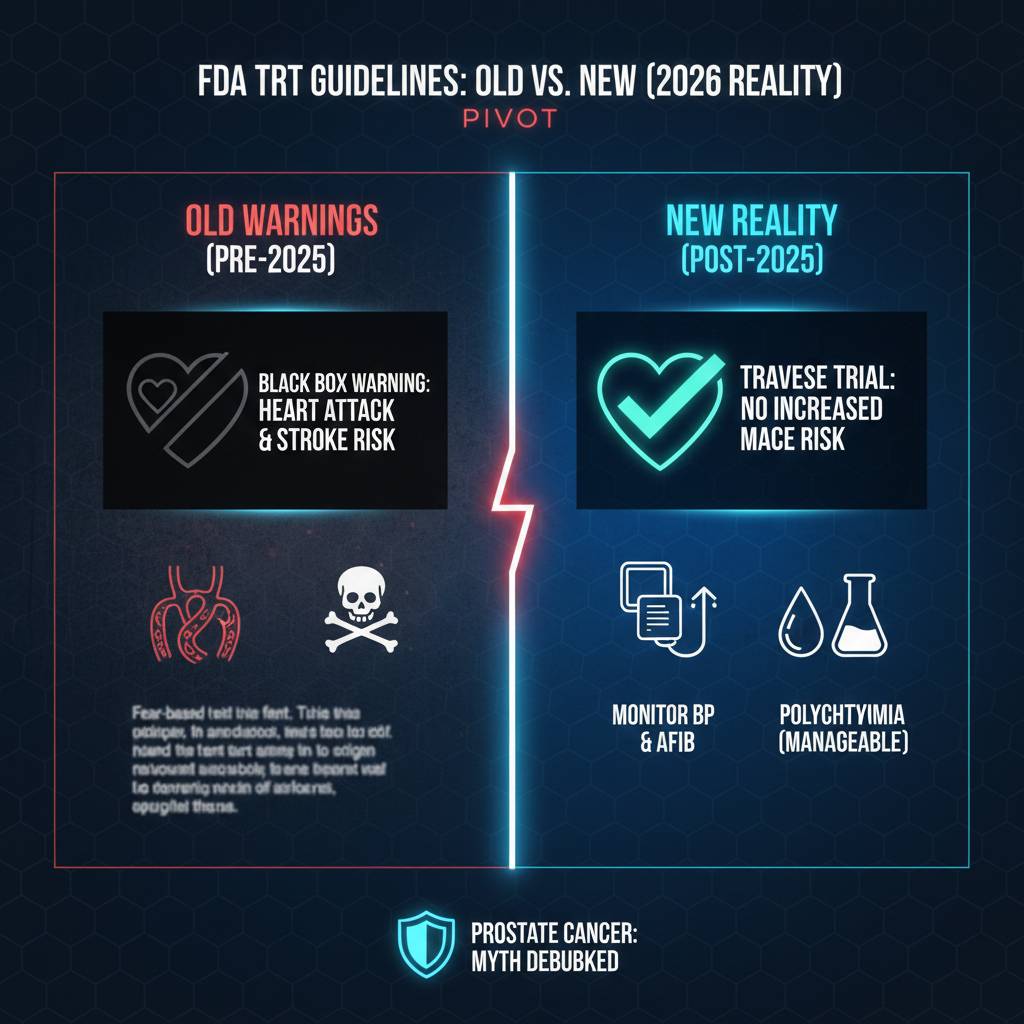
The FDA has removed the heart attack black box warning. Here's what changed and what you need to know.
In February 2025, the FDA removed its cardiovascular 'Black Box' warning from testosterone products — a major reversal driven by the TRAVERSE Trial (5,200+ men), which found TRT does not increase major adverse cardiac events (MACE). In December 2025, an FDA expert panel formally labeled testosterone a cornerstone of preventive medicine. What remains on labels: blood pressure/AFib monitoring requirements and hematocrit (polycythemia) warnings — both easily managed clinically. The prostate cancer myth has been officially declared 'no longer scientifically valid' by FDA experts; low testosterone may actually be more dangerous for prostate health. An active push exists to remove testosterone from Schedule III Controlled Substance status. Live Forever protocol: quarterly blood panels (PSA, hematocrit, lipids), precision micro-dosing, and metabolic stabilizers.
The "Black Box" Era: What Changed in 2025-2026?
For years, the FDA required a prominent "Black Box" warning on testosterone products, cautioning about the potential risk of heart attacks and strokes. In February 2025, the FDA officially began the process of removing this cardiovascular boxed warning.
Why the Change?
The TRAVERSE Trial, involving over 5,200 men, proved that TRT—when prescribed correctly—did not increase the risk of major adverse cardiac events (MACE) compared to a placebo.
The New Consensus
In December 2025, an FDA expert panel went a step further, labeling testosterone as a cornerstone of preventive medicine rather than a "lifestyle drug."
Important Context
This represents a major shift in how the medical community views testosterone replacement therapy, moving from fear-based warnings to evidence-based monitoring protocols.
The Current Warning Labels: What Remains?
While the heart attack "Black Box" is gone, the FDA still requires warnings for specific physiological shifts. These are not "reasons to avoid TRT," but "reasons to monitor TRT."
1. Blood Pressure & Atrial Fibrillation (AFib)
The FDA now emphasizes that TRT can cause a modest increase in blood pressure and a slightly higher incidence of AFib in certain populations.
The 2026 Protocol: We don't just "prescribe and forget." We require regular blood pressure monitoring and cardiovascular screening to catch these minor shifts before they become issues.
2. Polycythemia (Thick Blood)
The FDA maintains warnings about Erythrocytosis—the increase in red blood cell count.
- •The Reality: This is the most common side effect of TRT. If your hematocrit levels climb too high, your blood becomes more viscous.
- •The Fix: Regular blood work and, if necessary, therapeutic phlebotomy (donating blood) keep this risk at zero.
3. The "Limitation of Use" Clause
A lingering FDA stance is that TRT is approved for "organic hypogonadism" (genetic or injury-related) rather than just "age-related" decline.
The 2026 Shift: The 2025 Expert Panel has urged the FDA to expand these indications to include age-related low T, recognizing that "normal aging" doesn't mean "optimal living."
Concerned About TRT Safety?
Get personalized guidance from board-certified physicians who follow the latest FDA protocols.
Book Free ConsultationFDA Guidelines: Old vs. New (2026 Reality)
| Category | Old Warnings (Pre-2025) | New Reality (Post-2025) |
|---|---|---|
| Cardiovascular Risk | Black Box Warning: Heart Attack & Stroke Risk | TRAVERSE Trial: No Increased MACE Risk |
| Monitoring | Fear-based test trio: Heart, Liver, PSA only | Monitor BP & AFib + Polycythemia (Manageable) |
| Prostate Cancer | Assumed causation based on 1940s data | Myth Debunked - No longer scientifically valid |
| FDA Classification | Schedule III Controlled Substance | Push to Reclassify (Lower abuse potential than caffeine) |
Debunking the Prostate Cancer Myth
Perhaps the most significant outcome of the recent FDA expert panels is the final "nail in the coffin" for the 1940s-era belief that testosterone causes prostate cancer.
The Scientific Verdict
The FDA experts stated that the belief is "no longer scientifically valid." Decades of modern research have found no causal link between testosterone therapy and prostate cancer development.
The Protective Benefit
New data suggests that low testosterone may actually be more dangerous for prostate health, as it can lead to more aggressive tumor types if cancer does occur.
The Future: Reclassifying Testosterone
As of early 2026, there is a massive push to remove testosterone from the Schedule III Controlled Substance list.
The Argument
Testosterone has a lower abuse potential than caffeine and is less psychoactive than many legal substances.
The Goal
Removing the "Controlled" status would lower the barrier for patients, reduce the stigma, and allow primary care doctors to treat men's health with the same ease they treat high cholesterol.
The Live Forever Safety Standard
We don't wait for the FDA to tell us how to be safe; we use the TRIIM-X framework:
Quarterly Blood Panels
Monitoring PSA, Hematocrit, and Lipids to detect any changes early.
The Metformin Bridge
Using glucose stabilizers to protect metabolic health during therapy.
Precision Dosing
Using micro-doses to avoid the "spikes" that trigger blood pressure issues.
Ready for Evidence-Based TRT?
Work with Live Forever Health physicians who follow the latest FDA guidelines and prioritize your safety with comprehensive monitoring.
Frequently Asked Questions About FDA TRT Warnings
Is the heart attack warning still on testosterone bottles?
Does the FDA approve TRT for anti-aging?
What is the biggest real risk of TRT according to the FDA?
Related Articles
TRT Safety: Risks & Side Effects
Comprehensive overview of testosterone replacement therapy risks and how to minimize them with proper monitoring.
TikTok Testosterone Misinformation
Learn to spot dangerous misinformation about TRT on social media and get the facts from clinical experts.
Complete Guide to Testosterone & Low-T
Everything you need to know about testosterone levels, symptoms, testing, and treatment options.