
Understanding Perimenopause & Hormone Changes
Your complete guide to the hormonal transition: Learn how Progesterone and Estrogen shifts cause symptoms and what you can do about it.
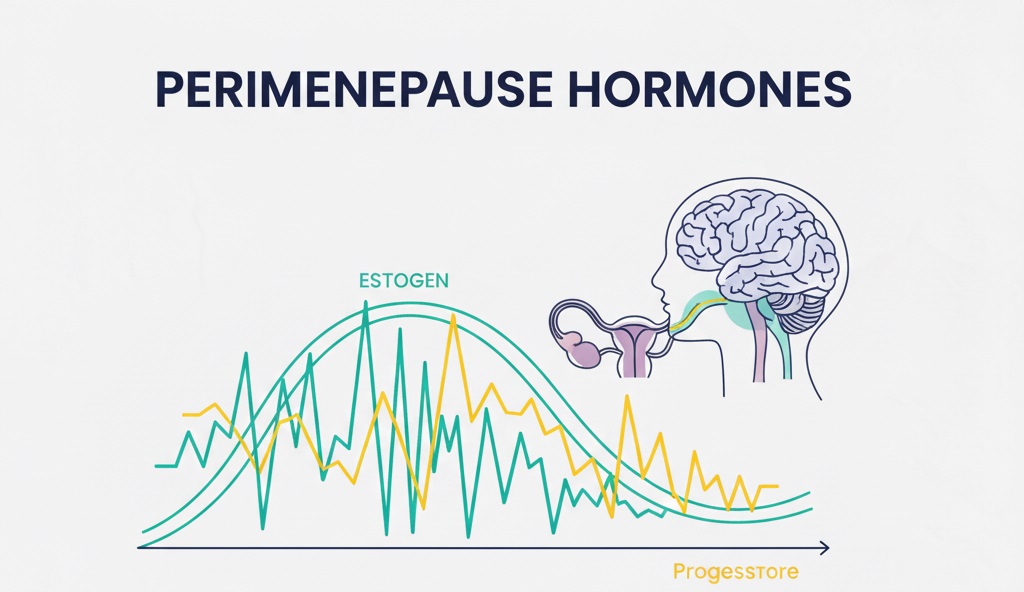
Perimenopause is the hormonal transition period preceding menopause, typically beginning in a woman's 40s (sometimes mid-30s), lasting an average of 4 years (up to a decade), and ending 12 months after the final menstrual period. It unfolds in two STRAW stages: Early Transition (cycle length changes ≥7 days, progesterone begins dropping, anovulatory cycles start) and Late Transition (amenorrhea ≥60 days, extreme estrogen fluctuations, periods become erratic or absent). The first and most impactful hormonal event is progesterone decline — progesterone is the body's calming, sleep-supporting hormone produced post-ovulation. As ovulation becomes sporadic, progesterone falls first, causing anxiety, insomnia, heavier periods, and worsened PMS. Estrogen (estradiol) then undergoes wild fluctuations — not a smooth decline. Estrogen peaks cause breast soreness and migraines; estrogen crashes trigger hot flashes and night sweats; the instability itself causes mood and cognitive disruption. FSH rises dramatically as the pituitary attempts to force ovulation from aging ovaries. Key symptoms: menstrual cycle changes, emotional volatility (mood swings, anxiety, depression risk), cognitive changes (brain fog, word recall), vasomotor symptoms (hot flashes, night sweats, insomnia), vaginal/urinary changes, bone loss acceleration, and metabolic shifts (visceral fat, increased LDL). HRT with progesterone (introduced first) and estrogen stabilizes levels and provides the most effective symptom relief, typically within 2–4 weeks.
Perimenopause: The Second Puberty
Perimenopause, meaning "around menopause," is the natural biological transition period that marks the end of a woman's reproductive years. This stage is not an illness; it is a hormonal recalibration that typically begins in a woman's 40s (but sometimes as early as the mid-30s) and lasts an average of four years, though it can span over a decade.
It ends precisely 12 months after a woman's final menstrual period (which is the point when menopause is officially diagnosed).
Early vs. Late Transition: The STRAW Staging
The symptoms and intensity of perimenopause depend on which phase of the transition you are in:
| Phase | Duration | Key Hormonal Event | Key Symptom Indicator |
|---|---|---|---|
| Early Transition | Varies (often years) | Progesterone decline begins; cycles may be shorter. | Menstrual cycle length changes by seven days or more. |
| Late Transition | 1–3 Years | Extreme Estrogen fluctuations; cycles are anovulatory. | Amenorrhea (absence of a period) for 60 days or more. |
Not Sure Which Phase You're In?
Track your symptoms and menstrual cycles to identify your transition phase. Our hormone specialists can help create a personalized treatment plan.
Explore Perimenopause SolutionsThe Hormonal Reality
The Roller Coaster: Progesterone Drops First
The entire perimenopausal transition is driven by the gradual and erratic decline of ovarian function. However, the first hormone to drop and cause noticeable symptoms is often Progesterone.
Progesterone is primarily produced after ovulation. As the ovaries begin to run out of viable eggs, ovulation becomes sporadic or fails altogether (anovulatory cycles).
Progesterone's Role:
It is the primary calming and stabilizing hormone.
⚠️ Symptom Link:
The lack of progesterone leads to symptoms often associated with estrogen dominance (though estrogen levels may still be normal or high): increased anxiety, insomnia, heavier or more painful periods, and worsened PMS (Premenstrual Syndrome).
Estrogen's Wild Ride: The Paradox of Estrogen Dominance
While the overall trend during perimenopause is a decrease in Estrogen (specifically Estradiol), the levels rarely decline smoothly. Instead, they fluctuate wildly—they can spike higher than normal in one cycle and crash low in the next.
📊 Symptom Link:
- • The peaks cause symptoms of estrogen excess: sore breasts and migraines
- • The subsequent crashes cause classic symptoms of estrogen deficiency: hot flashes and night sweats
- • The instability itself causes mood and cognitive issues
FSH, LH, and the Ovarian Signal
The brain constantly attempts to signal the aging ovaries to produce hormones.
- •Follicle-Stimulating Hormone (FSH): As the ovaries resist the brain's signals, the pituitary gland cranks up the production of FSH. Elevated and erratic FSH levels are an attempt to force ovulation. This is why checking FSH levels can indicate the transition, although the fluctuation makes a single test unreliable.
- •Testosterone (Androgens): Total testosterone levels often remain stable or decline very gradually. However, due to the loss of estrogen and progesterone, the body may experience a relative androgen excess, which can contribute to adult acne, thinning scalp hair, and weight gain around the midsection.
Ready to Balance Your Hormones?
Our Hormone Replacement Therapy programs are designed specifically for women in perimenopause.
Explore Women's Health ProgramsSymptom Mapping: Linking Hormones to the Body
1. The Menstrual Revolution
The defining physical change of perimenopause is the alteration of the menstrual cycle, driven by irregular production of progesterone and estrogen.
- • Cycle Length: Shorter (early) or longer (late, often >60 days)
- • Flow: Much heavier (unopposed estrogen) or much lighter
2. Emotional & Cognitive Chaos
The brain is rich in estrogen receptors. Erratic estrogen combined with lost progesterone destabilizes the nervous system.
- • Emotional: Mood swings, irritability, rage, anxiety, depression risk
- • Cognitive: Brain fog, memory lapses, word recall difficulty
3. The Thermostat Effect
The most iconic symptoms of transition, known as vasomotor symptoms, directly linked to sudden estrogen drops.
- • Hot Flashes & Night Sweats: Hypothalamus misreads temperature
- • Sleep Disturbances: Night sweats + lost progesterone = insomnia
4. Physical & Metabolic Shifts
Lower estrogen has widespread effects compromising long-term health.
- • Vaginal/Urinary: Dryness, discomfort, increased UTIs
- • Metabolic: Visceral fat storage, increased LDL cholesterol
- • Bone Health: Accelerated bone loss, osteoporosis risk
🔍 Experiencing These Symptoms?
Don't wait for symptoms to worsen. Our comprehensive hormone assessments identify exactly what your body needs. Learn more about our Perimenopause Treatment Programs.
Schedule Your Free ConsultationSolutions & Support: Thriving Through the Transition
Perimenopause is manageable. Symptom relief typically involves a combination of lifestyle intervention and medical management.
1. Hormone Therapy (MHT/HRT)
The most effective treatment for severe hot flashes, night sweats, and mood changes is Menopausal Hormone Therapy (MHT), which can stabilize fluctuating hormone levels. Progesterone is often introduced first to address sleep and anxiety in the early stages.
Learn About Our HRT Programs2. Diet and Nutrition
Focus on a diet rich in healthy fats, fiber, and adequate protein. Increase intake of calcium and Vitamin D to mitigate bone loss and Omega-3 fatty acids to support mood.
3. Exercise and Stress Management
Weight-bearing exercises (strength training) are essential to combat bone and muscle loss. Practices like meditation and deep breathing are crucial for lowering the stress hormone cortisol, which exacerbates hormone imbalance.
📚 Related: The Science Behind Lifestyle Optimization
Symptom Relief Timeline
| Intervention | Symptoms Addressed | Time to Relief |
|---|---|---|
| Hormone Therapy (HRT) | Hot flashes, mood swings, sleep, vaginal dryness | 2-4 weeks |
| Lifestyle Changes | Weight management, energy, stress | 4-8 weeks |
| Exercise Program | Bone health, mood, metabolism | 6-12 weeks |
| Stress Management | Anxiety, sleep quality, hormone balance | 2-6 weeks |
Embracing the Change with Live Forever Health
Perimenopause is a complex and sometimes challenging phase, but it is a natural, healthy process—not a countdown to decline. By understanding the why behind the erratic nature of your hormones, you reclaim the power to manage your symptoms effectively.
This transition is not about waiting for the storm to pass; it is about implementing intelligent, proactive strategies. At Live Forever Health, we view perimenopause as an opportunity to set a new, healthier trajectory for the decades to come.
Don't normalize suffering. Work with a hormone-literate practitioner to stabilize your hormones and turn the chaos of perimenopause into a foundation for your lifelong vitality.
Related Resources
Ready to Take Control of Your Hormonal Health?
Our hormone specialists provide personalized treatment plans for women navigating perimenopause. Get comprehensive testing, expert guidance, and ongoing support.