
TRT Without Insurance: What It Actually Costs in 2026 (And How to Lower It)
TRT Without Insurance: What It Actually Costs in 2026 (And How to Lower It)
Medically reviewed by the Live Forever Health clinical team · Updated April 2026 · 10 min read
The cost of testosterone replacement therapy is one of the most searched and least honestly answered questions in men's health. Most clinic websites bury their pricing behind a consultation wall. Most articles give you a range so wide it tells you nothing. This one gives you the actual numbers — broken down by every cost category, across every type of provider — and then shows you exactly how to reduce that number significantly without compromising the quality of your care.
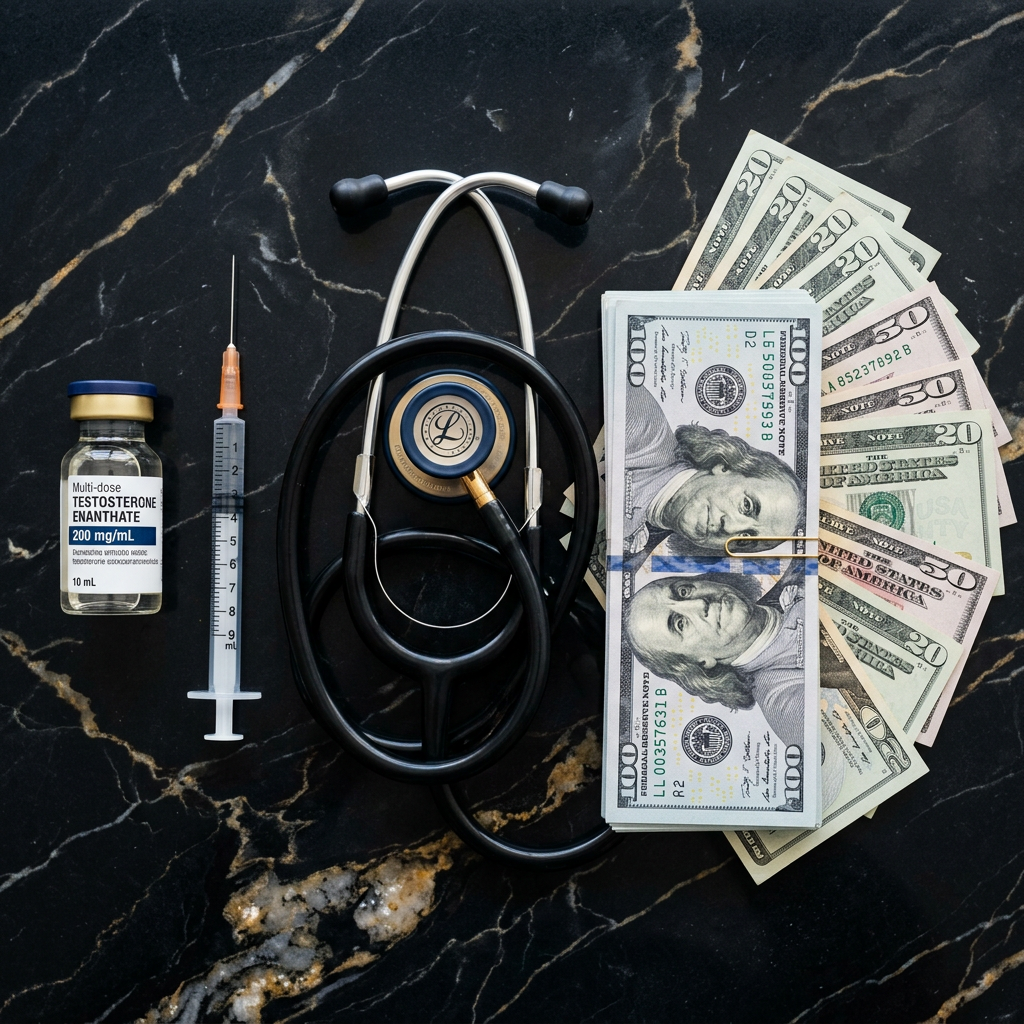
TRT without insurance is not inherently expensive. The medication itself — generic testosterone cypionate — costs between $25 and $60 per vial, and a single vial can last eight to sixteen weeks depending on your prescribed dose. That is less than most people spend on supplements in a month. The cost that makes TRT feel prohibitive is usually not the medication. It is the consultation fees, the lab work, and the physician oversight that surrounds it — which vary enormously depending on where you get your care.
Understanding where the money actually goes — and which costs are genuinely necessary versus which are inflated by traditional clinic overhead — is what makes it possible to access high-quality TRT at a price that is sustainable long term. This article breaks it all down: the real cost categories, what insurance does and does not cover, how different provider types compare on price, and eight specific strategies for reducing your out-of-pocket cost without cutting corners on medical safety.
The Real Components of TRT Cost — What You're Actually Paying For
When men ask about the cost of TRT, they are usually thinking about the medication. But the medication is only one of five distinct cost categories in a properly managed TRT protocol. Understanding all five is what makes it possible to make informed decisions about where to spend and where to save.
1. The Initial Consultation
Before any TRT prescription is written, a physician must evaluate your symptoms, review your medical history, and order baseline labs. This consultation ranges from free at some telehealth platforms to $200–$400 at traditional in-person men's health clinics. At concierge-style clinics or academic medical centers, initial evaluations with an endocrinologist or urologist can run $400 or more.
The consultation itself is not where you should be looking to cut costs — this is the clinical step that determines whether TRT is appropriate for you, identifies any contraindications, and establishes the baseline labs against which your response will be measured. A provider who skips or rushes this step is not saving you money — they are creating liability.
2. Baseline Laboratory Work
A comprehensive pre-TRT blood panel — total testosterone, free testosterone, SHBG, estradiol, LH, FSH, PSA, CBC with hematocrit, comprehensive metabolic panel, and thyroid function — is the clinical foundation of a safe TRT protocol. Without these numbers, there is no medical basis for the prescription and no baseline against which to measure response and safety.
This panel costs between $100 and $200 through direct-access lab services like Ulta Lab Tests or Walk-In Lab. It costs $300 to $600 when billed through a clinic's lab partners. It is one of the most significant areas where the choice of provider affects total cost, and it is an area where the cheaper option — ordering your own panel through a direct-access service — does not compromise quality in any clinical sense.
3. Testosterone Medication
This is where most people focus, and it is actually the least variable cost category for men who make informed choices. Generic testosterone cypionate injection — the most clinically validated, cost-effective, and widely prescribed TRT delivery method — is available at most pharmacies for $25 to $60 per 10ml multi-dose vial. A standard starting dose of 100–150mg per week means a single vial can last four to eight weeks.
The medication cost explodes when men choose branded products without clinical necessity. Branded testosterone gels (AndroGel) cost $300 to $500 per month. Newer oral testosterone (KYZATREX) costs $200 to $350 per month. These are legitimate medical products with valid clinical use cases — but for most men who are comfortable with self-injection, choosing injectable testosterone over topical or oral forms is a cost decision that has no meaningful clinical downside and saves $200 to $400 per month.
4. Ongoing Physician Oversight and Follow-Up Labs
This is the cost that catches most men off guard. TRT is not a set-it-and-forget-it prescription. Safe, effective TRT requires follow-up labs at 6 to 10 weeks to assess testosterone levels, estradiol, hematocrit, and PSA — and to adjust dosing accordingly. It requires ongoing physician access for dose management, symptom assessment, and protocol adjustment. And it requires annual comprehensive labs to monitor long-term safety.
At traditional in-person clinics, each follow-up visit costs $100 to $250, and follow-up labs cost $200 to $400 each time. At telehealth TRT platforms, ongoing oversight is typically structured as a monthly subscription that includes physician access and either includes labs or facilitates them at reduced cost. This is the area where choosing telehealth over traditional in-person care produces the largest long-term savings — often $1,200 to $2,400 per year — without any reduction in clinical safety when the provider is reputable.
5. Ancillary Medications
Depending on how your body responds to TRT, additional medications may be part of your protocol. Anastrozole — used to manage estradiol elevation when testosterone aromatizes to estrogen — is extremely affordable as a generic: $5 to $20 per month at most pharmacies. hCG, used to preserve testicular function and fertility on TRT, is more variable: $50 to $150 per month for compounded versions, $100 to $300 for branded options. Not every patient needs these medications, but they should be factored into cost planning for those who do.
What TRT Actually Costs Across Different Provider Types
Here is an honest, category-by-category comparison of what TRT costs at different types of providers — from traditional in-person clinics to telehealth platforms. These are real-world ranges based on publicly available pricing and patient-reported cost data as of early 2026:
| COST CATEGORY | TRADITIONAL CLINIC (In-Person) | TELEHEALTH TRT (Mid-Range) | TELEHEALTH TRT (Budget) | LIVE FOREVER HEALTH |
|---|---|---|---|---|
| Initial Consultation | $200–$400 | $75–$150 | $0–$50 | Included |
| Baseline Blood Work | $300–$600 | $100–$200 | $50–$150 | Included / low cost |
| Testosterone Medication (monthly) | $80–$200 (branded) | $50–$120 | $30–$70 | Affordable — transparent pricing |
| Follow-Up Labs (6–10 weeks) | $200–$400 | $75–$150 | $30–$100 | Included in protocol |
| Physician Check-Ins | $100–$250 per visit | $50–$100/quarter | Limited or none | Ongoing physician access |
| Estradiol Management / AI (if needed) | $50–$150/month | $20–$60/month | Often not offered | Managed as part of protocol |
| Annual Labs (12-month panel) | $300–$600 | $100–$200 | $50–$100 | Included in annual protocol |
| Estimated YEAR ONE Total | $2,400–$5,500+ | $1,200–$2,400 | $600–$1,200 | See liveforeverlab.com for current pricing |
The Key Insight from This Table
The medication cost is not what drives the difference between a $600/year and a $5,500/year TRT program. It is the consultation structure, lab billing, and physician oversight model. Telehealth platforms that bundle physician access into a subscription model and facilitate affordable lab testing have compressed the cost of medically supervised TRT to a fraction of what traditional clinics charge — while maintaining the clinical oversight that makes TRT safe.
TRT Medication Cost Breakdown: Generic vs. Branded
The single largest lever most men have over their TRT cost is the choice of medication form. Here is a full breakdown of what each option costs in real terms:
| MEDICATION / FORM | BRAND NAME COST | GENERIC / COMPOUND COST | TYPICAL MONTHLY DOSE | NOTES |
|---|---|---|---|---|
| Testosterone Cypionate (Injectable) | ~$100–$150/vial | $25–$60/vial | 1 vial lasts 4–8 weeks depending on dose | Most cost-effective TRT option; widely available as generic; FDA-approved |
| Testosterone Enanthate (Injectable) | ~$80–$140/vial | $20–$55/vial | 1 vial lasts 4–8 weeks | Very similar to Cypionate in cost and profile; slightly shorter half-life |
| Testosterone Gel (AndroGel / generic) | $300–$500/month branded | $50–$120/month generic | Daily application; 50–100mg/day | Significant cost reduction with generic; skin transfer risk; daily compliance required |
| Testosterone Cream (Compounded) | N/A — compounded only | $40–$100/month | Daily application; dose varies | Must come from licensed compounding pharmacy; lower transfer risk than gel; not FDA-approved as branded product |
| KYZATREX (Oral Testosterone) | $200–$350/month | No generic available yet | Twice daily with meals | Newest FDA-approved form; needle-free; higher cost than injectables; good for needle-averse patients |
| Anastrozole (Estradiol Management) | $30–$80/month branded | $5–$20/month generic | 0.25–1mg, 1–3x/week as needed | Often prescribed alongside TRT; generic is very affordable; not all patients need this |
| hCG (Fertility Preservation) | Varies; often $100–$300/month | Compounded: $50–$150/month | 500–1,500 IU 2–3x/week | Used to preserve testicular function and fertility on TRT; compounded versions significantly more affordable |
A Word on Compounded Medications
Compounded testosterone and ancillary medications are produced by licensed 503A compounding pharmacies and can significantly reduce medication costs. They are legal, common in TRT practice, and used by thousands of patients. However, the quality of compounding pharmacies varies — and the regulatory landscape for compounded GLP-1 medications in particular has been evolving rapidly in 2026. Always confirm your clinic uses a licensed 503A or 503B facility and that the physician is monitoring your labs regardless of whether medications are compounded or branded.
What Insurance Actually Covers — And What It Doesn't
Insurance coverage for TRT is one of the most confusing and inconsistently documented areas of men's health care. Here is the honest picture of what different coverage scenarios look like in practice:
| COVERAGE SCENARIO | INSURANCE TYPE | TYPICAL COVERAGE | REALISTIC EXPECTATION |
|---|---|---|---|
| Diagnosed Hypogonadism (low T confirmed by labs) | Most major commercial plans (Aetna, BCBS, UHC, Cigna) | Often covers medication; may cover labs and some visits with prior auth | Significant coverage possible but prior authorization is often required and can be denied; out-of-pocket still common for monitoring labs |
| Age-Related Testosterone Decline (no diagnosis code) | Most commercial plans | Typically NOT covered — FDA approves TRT only for diagnosable hypogonadism, not age-related decline | Most men over 40 pursuing TRT for low-normal levels will not qualify for coverage under current indications |
| Telehealth TRT Clinic Prescriptions | Most commercial plans | Variable — some telehealth prescriptions are covered, many are not depending on provider network status | Many telehealth TRT clinics are out-of-network; insurance may cover the medication at pharmacy but not the consultation |
| Testosterone Medication at Pharmacy (with Rx) | Plans with prescription drug benefit | Generic testosterone cypionate is often covered under Tier 1 or 2 formulary when prescribed by any physician | If you have a legitimate Rx, even without visit coverage, the medication itself may be covered or substantially discounted |
| Medicare / Medicaid | Government programs | Medicare Part D covers testosterone when prescribed for approved indications; Medicaid coverage varies by state | Generally favorable for confirmed hypogonadism diagnosis; prior authorization requirements apply; age-related decline typically excluded |
| HSA / FSA Accounts | Tax-advantaged accounts | TRT medications and related medical expenses are HSA/FSA eligible when prescribed by a physician | One of the most reliable ways to reduce effective TRT cost — paying with pre-tax dollars reduces real cost by 20–37% depending on tax bracket |
The single most important takeaway from this table: the FDA's current approved indications for testosterone therapy are narrower than what many physicians prescribe and what many patients need. Insurance coverage tracks the FDA indication — not the clinical reality. This means a man with testosterone levels of 320 ng/dL and clear symptoms may receive TRT from a physician but not receive insurance reimbursement, because his levels technically fall within the broad 'normal' reference range even though they represent a meaningful deficiency for his age.
This is not a reason to avoid TRT. It is a reason to approach TRT with realistic expectations about insurance and a clear plan for managing the cost out of pocket — which, as the tables above demonstrate, is far more manageable than most men assume.
8 Proven Ways to Lower Your TRT Cost Without Compromising Care
The following strategies are not workarounds or shortcuts. Each represents a legitimate, physician-compatible approach to reducing what you pay for TRT without reducing the quality or safety of your protocol:
| COST REDUCTION STRATEGY | HOW IT WORKS | REALISTIC SAVINGS POTENTIAL |
|---|---|---|
| Choose Injectable Testosterone Cypionate | Generic testosterone cypionate is the most cost-effective TRT medication available. A 10ml multi-dose vial at 200mg/mL costs $25–$60 at most pharmacies and can last 8–16 weeks depending on prescribed dose. This single choice reduces medication cost by 70–90% compared to branded topicals. | Save $100–$400/month vs. branded gels and newer oral forms |
| Use GoodRx or Prescription Discount Programs | GoodRx, RxSaver, and similar programs negotiate pharmacy prices independent of insurance. Generic testosterone cypionate is often available for $15–$40 with GoodRx at major pharmacy chains — sometimes cheaper than insurance copays. | Save 30–80% on medication cost vs. list price; works even with insurance |
| Pay with HSA or FSA | TRT prescribed by a physician is an eligible medical expense for HSA and FSA accounts. Paying with pre-tax dollars reduces the effective cost by your marginal tax rate — typically 22–37% for most working adults. | Reduce effective cost by 22–37% — one of the easiest savings with zero lifestyle change |
| Choose Telehealth Over In-Person | Telehealth TRT clinics typically charge $75–$200/month for physician oversight vs. $200–$500/quarter at traditional in-person men's health clinics. Overhead costs are lower, savings are passed to the patient. | Save $1,200–$2,400/year on physician oversight fees alone |
| Use an Independent Lab for Blood Work | Services like Ulta Lab Tests, LabCorp's direct-access program, and Walk-In Lab allow patients to order their own testosterone and hormone panels without a physician's order at significantly lower prices than hospital or clinic labs. | Pay $80–$150 for a comprehensive hormone panel vs. $300–$600 through a clinic's lab billing |
| Ask About Compounded Medications | Licensed compounding pharmacies produce testosterone products — including injectable cypionate, topical creams, and ancillary medications like anastrozole and hCG — at substantially lower prices than branded equivalents. Requires physician prescription. | Save 40–70% vs. branded medications; particularly significant for hCG and topical formulations |
| Optimize Your Protocol to Reduce Medication Volume | Twice-weekly subcutaneous injections at lower doses (50–70mg twice weekly) are clinically equivalent or superior to once-weekly higher doses for most patients, and use less total medication while providing more stable levels. Discuss optimal dosing with your physician. | Reduce medication consumption by 10–25% with no compromise in clinical outcomes |
| Annual Lab Consolidation | Rather than ordering labs piecemeal throughout the year, consolidating into two comprehensive panels (at 6–10 weeks and at 12 months) covers all necessary monitoring and reduces the total number of tests ordered over a year. | Avoid $200–$400 in redundant lab testing through coordinated protocol monitoring |
"The men who pay the most for TRT are almost never paying for better care. They are paying for more expensive overhead — bigger offices, more administrative staff, higher brand recognition. A well-structured telehealth program with an experienced physician, proper labs, and responsive monitoring delivers the same clinical outcomes at a fraction of the cost. The medication going into your body is the same. The physiology is the same. The results are the same."
— Live Forever Health Clinical Team
The Hidden Cost of Not Treating Low Testosterone
The cost conversation around TRT almost always focuses on what you spend to treat it. It rarely addresses the cost of leaving it untreated — which is the more significant financial and quality-of-life calculation for most men.
Productivity and Career Impact
The cognitive symptoms of low testosterone — brain fog, reduced motivation, impaired executive function, and persistent fatigue — have measurable effects on workplace performance. Research linking hormonal status to cognitive output is well established. A man functioning at 70 percent of his cognitive capacity due to untreated low T is bearing a productivity cost that dwarfs a few hundred dollars per month in TRT expenses — and one that is rarely framed as a financial consideration in the cost conversation.
Downstream Health Costs
Untreated testosterone deficiency is associated with increased risk of metabolic syndrome, type 2 diabetes, cardiovascular disease, osteoporosis, and depression — all of which carry substantial long-term healthcare costs. A 2019 analysis in the Journal of Sexual Medicine estimated that the downstream healthcare expenditures associated with untreated hypogonadism — hospitalizations, diabetes management, cardiovascular interventions — substantially exceed the cost of TRT over a comparable time period. The cost of the treatment is a fraction of the cost of the conditions it helps prevent.
Quality of Life — Which Has a Real Financial Value
The relationships, the professional engagement, the physical capacity, the mental resilience — these are not abstract benefits. They have concrete financial value in the form of career performance, sustained physical health, and reduced reliance on other healthcare interventions. The calculation of whether TRT is 'worth the cost' is incomplete if it only counts what goes out and not what is preserved or gained.
Frequently Asked Questions
Q: How much does TRT cost per month without insurance?
With the right choices, medically supervised TRT can cost as little as $80 to $150 per month without insurance — including the medication (generic testosterone cypionate), physician oversight through a telehealth platform, and a share of annual lab costs. The number rises to $200 to $400 per month for most telehealth programs with included labs and $400 to $600 per month or more for traditional in-person clinic care. The wide range reflects the structure of the program, not the quality of the medicine.
Q: Is TRT covered by insurance?
Sometimes — specifically when there is a documented diagnosis of hypogonadism (clinically low testosterone confirmed by labs and symptoms) and the prescription is processed through an in-network provider. Age-related testosterone decline without a formal hypogonadism diagnosis is generally not covered. Telehealth clinic prescriptions may not be covered even when the medication itself would be if prescribed by an in-network physician. If coverage is important to you, verifying your specific plan's formulary and requesting prior authorization through an in-network provider is the most reliable path to coverage.
Q: What is the cheapest legitimate form of TRT?
Generic testosterone cypionate via self-injection is consistently the most cost-effective form of TRT. A 10ml vial at 200mg/mL costs $25 to $60 and can last 8 to 16 weeks at standard dosing. Combined with GoodRx discounts and direct-access lab testing for follow-up blood work, the medication-plus-monitoring cost for a well-structured injectable TRT program can be reduced to well under $100 per month. The clinical evidence base for injectable testosterone is also the strongest of any delivery method.
Q: Can I use my HSA or FSA for TRT?
Yes. Testosterone replacement therapy prescribed by a licensed physician is an eligible medical expense for both Health Savings Accounts (HSA) and Flexible Spending Accounts (FSA). This includes the medication, physician consultations, and laboratory testing. Paying for TRT with pre-tax HSA or FSA funds reduces the effective out-of-pocket cost by your marginal tax rate — typically 22 to 37 percent for most working adults — making it one of the simplest and most impactful cost reduction strategies available.
Q: Is cheap TRT safe? What should I watch out for?
The medication itself — generic testosterone cypionate from a licensed US pharmacy — is identical in quality to the branded version regardless of price. What cheap TRT sometimes lacks is adequate medical oversight: baseline labs before starting, follow-up labs to assess estradiol and hematocrit, dose adjustment based on results, and responsive physician access when issues arise. These are the elements of TRT that protect safety, and they are what you should never cut. A program that is cheap because it skips monitoring is not a bargain — it is a liability. A program that is affordable because it has eliminated unnecessary overhead while maintaining clinical rigor is the goal.
Q: How does Live Forever Health price their TRT program?
Live Forever Health structures our TRT program to make physician-supervised hormone therapy genuinely accessible — with transparent pricing, included physician oversight, and guidance on the most cost-effective path to the labs and medications you need. For current pricing, visit liveforeverlab.com or book a consultation where a physician can walk you through the protocol and costs specific to your situation.
The Bottom Line
TRT without insurance costs what you make it cost — and that range is wider than most men realize before they start researching. At its most expensive, traditional in-person clinic TRT can cost $400 to $500 per month or more. At its most affordable — with generic injectable testosterone, telehealth physician oversight, direct-access lab testing, and GoodRx — medically supervised TRT can cost less than $100 per month.
The clinical outcomes between these two extremes are not meaningfully different when the telehealth program maintains the same standards of evaluation, monitoring, and dose management as the traditional clinic. The difference is overhead, not medicine.
The most important thing to understand about TRT cost is what it buys you: not just a medication, but the consistent hormonal environment that supports energy, cognition, body composition, cardiovascular health, and quality of life over the long term. Framed against those outcomes — and against the downstream healthcare costs of leaving testosterone deficiency untreated — the number looks very different from how it appears on a monthly invoice.
If cost has been the reason you have been putting off getting evaluated, the honest answer is that it should not be. There is a path to medically supervised TRT that fits almost any reasonable budget. Finding it starts with a consultation.
References & Further Reading
- Bhasin S, et al. (2018). Testosterone Therapy in Men With Hypogonadism: An Endocrine Society Clinical Practice Guideline. Journal of Clinical Endocrinology & Metabolism.
- Mulhall JP, et al. (2018). Evaluation and Management of Testosterone Deficiency: AUA Guideline. Journal of Urology.
- Colbert LH, et al. (2019). Healthcare Costs Associated With Untreated Hypogonadism in Men. Journal of Sexual Medicine.
- Layton JB, et al. (2014). Testosterone Lab Testing and Initiation in the United Kingdom and the United States. Journal of Clinical Endocrinology & Metabolism.
- TRAVERSE Trial Investigators. (2023). Cardiovascular Safety of Testosterone-Replacement Therapy. New England Journal of Medicine.
- GoodRx Health. (2026). Testosterone Cypionate Price Comparison Data. goodrx.com.
- IRS Publication 502. (2025). Medical and Dental Expenses — HSA/FSA Eligible Expense Guidelines. Internal Revenue Service.
- American Urological Association. (2024). Low Testosterone — Patient Guide. auanet.org.